
Tomatoes are arguably the most famous savory fruit. In addition to sparking heated debates of correct pronunciation (Toe-may-toe? Toe-mah-toe?), they boast a unique and versatile combination of sweetness, acidity, and umami flavor. Furthermore, their wide spectrum of colors, shapes, and sizes make them a visually appealing piece of produce.
Tomatoes require ample sunlight and specific temperature conditions to thrive. Although agricultural methods using greenhouses and vertical farming are becoming more popular, local tomato growing is expensive and difficult to maintain on a large scale in the United States. As such, 71% of tomatoes sold in the United States actually come from Mexico, according to the USDA in 2016.
Luckily, a special process of ripening allows tomatoes to survive an arduous journey from field to supermarket without sacrificing flavor and texture.
The Tomato Timeline: Flavor, Structure, and Picking
I’ll exclude explanation of tomato flowers and briefly discuss basic tomato fruit growth. 
Image by Wageningen University
Tomato fruit cells divide using mitosis. These cells expand from intake of water, and when combined with intake of carbon dioxide and light energy, can perform photosynthesis to create glucose and glucose products. This provides sweetness; about half of the sugar in tomatoes is glucose, and about half is sucrose (a fructose molecule bonded with a glucose molecule). Glucose also provides structural elements, making a carbohydrate called cellulose that provides support in cell walls.
Once a tomato has reached maturity, the ripening process begins. To avoid the hassle of protecting soft, fragile tissues, tomato farmers pick their crop when they are an optimal size but still underripe. The tomato will not get bigger, as cell reproduction and growth halts upon detachment from the plant.
Why Tomatoes Can Ripen Off the Vine: Ethylene and Climacteric Ripening
If you pick an underripe strawberry, it’s not going to get any riper. You can leave it a sunny counter for two weeks and it will just undergo decomposition and senescence (programmed cell death). Yuck!
Tomatoes are a little different. They produce a gaseous plant hormone called ethylene (C2H4) during ripening, which triggers several physiological and chemical processes. Ethylene is produced at a tomato’s maturity, whether or not it’s attached to the vine. This is why tomatoes continue to ripen after being picked, and can still taste great if they are picked when underripe.
Ethylene binds to protein complex receptors in the rough endoplasmic reticulum of the cell, stimulating a transduction pathway of proteins and second messengers. Eventually, the signal reaches the nucleus and activates transcription factors, which are the first step in “turning on” genes. As a result, ethylene “turns on” production of lycopene (a red carotenoid), making tomatoes red, and decreases acidity, making them taste sweeter. Additionally, it increases cellular respiration and creates various enzymes that cause pectin breakdown.
The ethylene hormone also stimulates more production of ethylene, creating a positive feedback loop, and, more specifically, an autocatalytic reaction. This results in a climax of ripening, hence the name “climacteric reaction”.
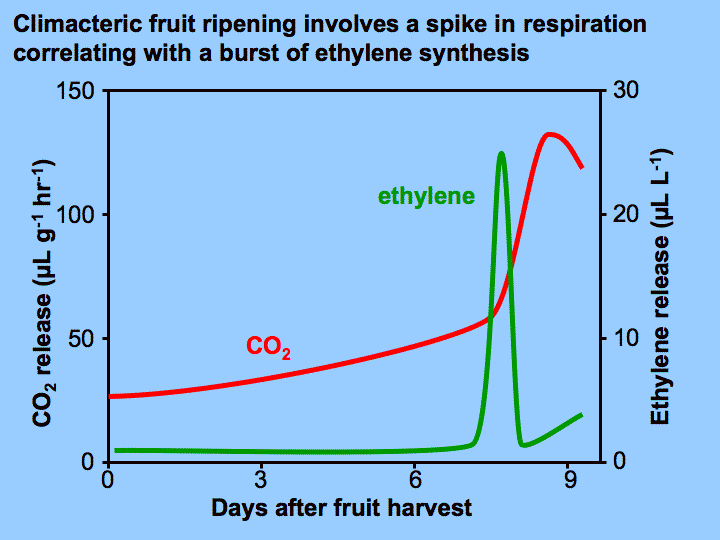
Graph from Ross E. Coning
Tomato “Menopause”:
Ethylene production decreases rapidly after its peak in climacteric ripening. This is comparable to the sharp decrease of hormones in female humans’ climacteric state (menopause). In tomatoes, this marks the transition from ripening to senescence.
Controlling Climacteric Ripening:
You may have noticed that tomatoes ripen in clusters on a tomato plant. This is partially because nearby tomatoes receive a similar level of sunlight and can photosynthesize (reach maturity) at similar rates. However, it is also because ethylene is a gaseous hormone, and thus the release of ethylene from one tomato fruit can reach neighboring tomatoes, expediting their ripening and triggering a domino effect of ethylene production. This is a concern for tomato shippers who aim to slow the ripening process, because one ripe tomato can trigger ethylene production in several others.
Tomato transporters can control the speed and degree of tomato ripeness in several ways. Many companies control the climate of their tomato-holding spaces by circulating carbon dioxide though, dispersing and diluting ethylene. They also decrease the temperature of the environment to slow ethylene production. Additionally, some companies spray tomatoes with chemicals such as 1-MCP, which covalently bond to ethylene protein receptors and inhibit the downstream pathway of signal transduction. This prevents expression of genes that cause ripening characteristics.
How can you ripen picked tomatoes?
Luckily, you don’t need chemicals or ethylene synthesizers to ripen tomatoes at home. The age old tactic of placing tomatoes together in a brown paper bag works! The combination of several fruits’ ethylene secretion increases their speed of ripening. Make sure to poke some holes in the bag to allow ethylene to escape- if there is too much ethylene, your produce will enter senescence and become overripe. Ethylene concentrations as low as 1 ppm can increase ripening speeds, so there is no reason to go overboard.
If you really want to speed things up, place tomatoes in a bag with other climacteric fruits such as bananas or passionfruit, which emit even more ethylene than tomatoes.
Sources:
 Burns Bites